A turnaround expert who takes equity, not fees.
Most turnaround people invoice you £800 to £2,500 a day to fix a business that is already short of cash, then leave. I do the opposite. I buy between 40 and 100% of the company, put my own capital and infrastructure behind it, and I am paid only if it works. 32 M&A transactions over 12 years, and 5 trading companies I still own.
Nothing reaches your team, your bank or your competitors. Most owners who call are not in crisis, they just want to know where they stand.
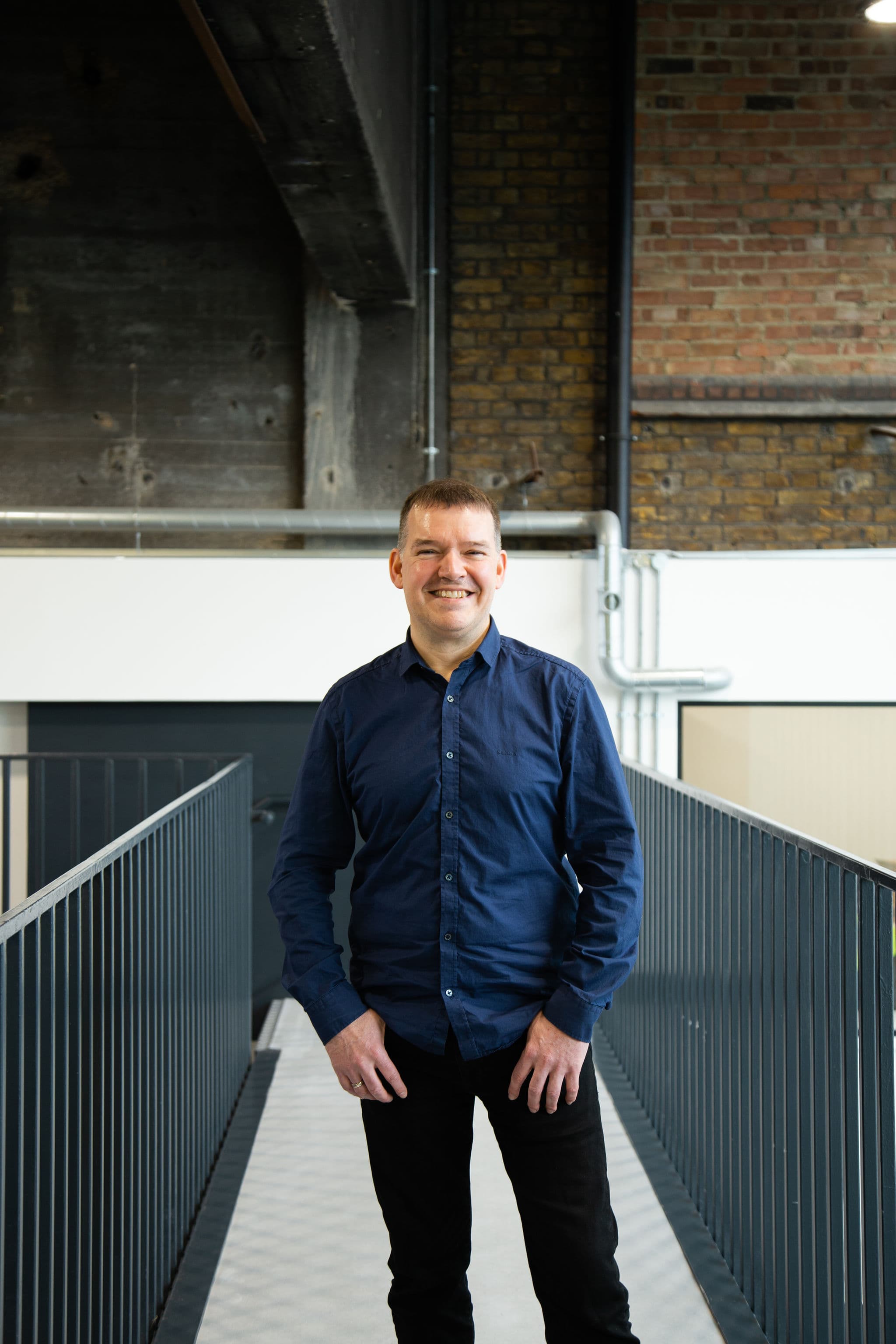
I fix businesses as an owner, not as an adviser.
A consultant is paid for the time they spend on your problem. I am paid by what the business is worth in five years, because I own part of it. That single difference changes every recommendation that follows from it, and it is the reason nothing leaves the business while it is being repaired.
- No day rate, no retainer and no success fee. Nothing leaves the business while it is being fixed
- Capital in from me, rather than another loan stacked on the one you cannot service
- Finance, IT, HR and systems handled by the group instead of by you
- You keep a stake, so a recovery pays you twice rather than once
- Your brand stays over the door and your people stay behind it
Twelve years of buying businesses that needed work.
Buying and turning around are the same job done by the same person here. I have never bought a company that was already running perfectly, because a company running perfectly is priced as if it is. The value is in the gap between what a business is doing and what it should be doing, and closing that gap is the whole model.
I started in 2014 with a single acquisition, structured without the full purchase price in cash. It doubled the profits of the business I already had. Nine more followed between 2015 and 2017, and the count now stands at 32 M&A transactions across 12 years.
Today I own 5 trading companies producing over £2M+ in annual portfolio profit, and I completed 3 strategic exits in 2024. I do not run any of them day to day. That is the point: a business that still depends on one person has not been turned around, it has been propped up.
Employee retention across those deals runs at around 85%, against roughly 40% in straight buyouts. In a trades business the engineers are most of what you are buying, so losing them is not a saving, it is the failure mode.
- RossairMechanical & electrical / HVAC
- Armex EnergyRenewable Energy & infrastructure
- JMC DrywallDrylining & plastering
- MactribeManaged IT services
- Network LondonManaged IT services
- Your companyThe next conversation
Target: £10M EBITDA across the group within 24 months.
Six places the money is usually hiding.
The recovery is rarely found in dramatic cuts. In an established, owner-managed business it is found in six unglamorous places, ordered here by how much they return for how little disruption.
Almost every struggling business is a cash problem wearing a profit problem’s clothes. Debtor days, work in progress, retentions, stock and payment terms come first, because they release money that is already yours and they need nobody’s permission.
Most owner-managed businesses price on a margin they last checked years ago. Job-level costing, quoting discipline, and knowing which contracts genuinely lose money usually move more profit than any cost-cutting exercise does.
Cost cutting is the last lever, not the first, and cutting the wrong things is how a recoverable business becomes a dead one. The people who deliver the work stay. The spending that quietly became permanent gets looked at properly.
A business where everything routes through the owner has a growth ceiling and a valuation discount at the same time. Building the layer underneath fixes both. It is also the thing most owners never get to, because they are too busy working.
Asset-backed lending against debtors, stock and equipment, restructured facilities, and capital going in as equity rather than as borrowing. A business that is struggling rarely needs another loan stacked on the one it cannot already service.
Finance, IT, HR, compliance and systems move across to the group. That is infrastructure you could never justify buying on your own, and it hands back the part of the week you were losing to administration.
Cash first. Cost cutting last.
The order is the method, not a preference. Cash buys the time to fix everything else, and a business that runs out of it stops having options no matter how good the plan was.
- 01Thirteen week cash
A weekly cash forecast out to thirteen weeks, built properly. Until that exists nobody knows how much time the business actually has, and that includes you.
- 02Stabilise
Protect the payroll, reach the creditors who matter before they reach you, and stop the cash leaving faster than it arrives. Nothing structural happens until the immediate pressure is off.
- 03Find the real margin
Cost the jobs and the contracts one by one. In most businesses a small number of them are quietly being funded by the rest, and that is visible within a fortnight once somebody actually looks.
- 04Rebuild and invest
Capital in, back office across to the group, the management layer built underneath you, and growth funded properly. This is the part a consultant leaving on day ninety never reaches.
Hiring a consultant, or bringing in a partner.
Both are legitimate. A consultant makes sense when you have the cash to fund the fix and want to keep 100% of the outcome. This makes sense when you do not, or when the thing that needs fixing is the fact that everything runs through you.
| Turnaround consultant | Equity partner | |
|---|---|---|
| What you pay | £800 to £2,500 a day, invoiced monthly | Nothing. I take a stake instead |
| Who carries the risk | You do. The fee is payable either way | Both of us. I am paid by the outcome |
| Money into the business | None. Cash leaves it | Capital in, as equity rather than debt |
| Back office and systems | Recommended to you | Provided by the group |
| How long they stay | Until the engagement ends | It is my company now. I do not leave |
| What you keep | 100% of a business you still have to fix | A stake in one that has been fixed and funded |
| The trade-off | You keep full ownership | You give up control of part of it |
How turnaround people get paid, stated plainly.
Worth understanding before you speak to anybody, because the payment model decides whose interests the work serves. Two of these take money out of a business that is short of it.
A consultant or interim charges a daily rate, commonly £800 to £2,500 in the UK, invoiced monthly whatever the outcome. It is the most common model and the most misaligned one, because the longer the problem takes to solve the more it pays. Cash leaves a business that is already short of it.
A base fee plus a percentage of the improvement, or of an eventual sale. Better aligned than a pure day rate, but the base is still payable if nothing works, and agreeing what counts as "the improvement" is where these arrangements usually come apart.
I take a stake instead of sending an invoice. No day rate, no retainer, no success fee, so nothing leaves the business while it is being fixed. I am paid by the same thing that pays you, which is the business being worth more in five years than it is worth today.
Six things owners recognise, and usually ignore.
Almost nobody calls too early. Most call a year later than they should have, because the trigger everybody waits for is a loss and the trigger that actually matters is cash.
The accounts show a profit and there is never any money. That gap is working capital, and it is the most common and the most fixable problem in an owner-managed business.
Director loans going in rather than out, VAT or PAYE quietly being used as a credit line, or a personal guarantee you have stopped mentioning at home.
Turnover is up and cash is down. Growing on long payment terms without the working capital behind it is how genuinely profitable businesses fail.
A single client above roughly a quarter of revenue is not a customer, it is a risk. It caps what the business is worth and it lets somebody else decide your future.
Every quote, every problem and every key relationship comes through you. It is why you cannot take a holiday, and it is why a buyer discounts the price.
Not a metric, but the thing owners say first. Most people wait too long because admitting it feels like failing, and the options are always better twelve months before that point than twelve months after it.
Whether this is worth a conversation.
I would rather tell you no on the first call than three months into diligence. The second row on the right is the one that matters most, and if it applies to you, you need a licensed insolvency practitioner rather than a buyer.
I am the right call if
- The business is solvent, or close enough to be made solvent without a formal process
- There is a real product, real customers, and a team worth keeping
- The problem is cash, margin, capacity or succession rather than a market that has gone
- You would rather keep a stake in something fixed than walk away from something broken
- You want the truth about your position more than you want reassurance
I am the wrong call if
- The company is insolvent and needs a licensed insolvency practitioner, not a buyer
- You want a consultant for three months and then to be left alone with the same problem
- Demand for what you sell has genuinely gone and there is nothing left to rebuild around
- You are looking for a loan rather than a partner
- You want to be told it is fine when it is not
To be completely clear: I am not a licensed insolvency practitioner and I do not give insolvency advice. If your company is insolvent, you need a licensed practitioner and you need one quickly. I work with businesses that are underperforming but still viable, which is usually the stage before that, and I will tell you which side of the line you are on rather than take up your time.
Turnaround: the questions owners ask me.
More detail on the terminology and the method is in the full guide.
How much does a business turnaround specialist cost?
Most charge a day rate, commonly £800 to £2,500 in the UK, sometimes with a success fee on top. That money leaves a business already short of cash and is payable whether the recovery works or not. I do not work that way. I take equity instead of an invoice, so there is no day rate, no retainer and no fee, and I am paid only by the business being worth more later.
When should I call a turnaround specialist?
Earlier than most owners do. The reliable trigger is not a loss, it is cash: if you cannot say what your bank balance will be in eight weeks, or you are funding the payroll personally, that is the point. Options narrow sharply as cash runs down, and the difference between a call made twelve months early and one made three months late is usually the difference between a sale and a closure.
Is a turnaround specialist the same as an insolvency practitioner?
No, and the difference matters. An insolvency practitioner is licensed and regulated, and handles formal processes such as a CVA, administration or liquidation for companies that are insolvent. A turnaround specialist works with companies that are still solvent, or close enough to be made solvent, with the aim of avoiding a formal process entirely. I am not an insolvency practitioner and I do not give insolvency advice.
Can a turnaround specialist buy my business instead?
That is exactly what I do. Rather than charging you to fix the business and then leaving, I acquire between 40 and 100% of it, put capital and infrastructure behind it, and fix it as an owner. Most owners keep a stake, so they get liquidity now and a second payday if it works. It is the only version of this where the person advising you carries the same risk you do.
Will you make my staff redundant?
Redundancy is the last lever, not the first, and reaching for it early is usually the sign of somebody who has not found the real problem. Retention across my partnership deals runs at around 85%, against roughly 40% in straight buyouts, and that is deliberate: the people who deliver the work are most of what makes a business worth buying. Overhead that quietly became permanent gets examined. The engineers do not.
How long does a business turnaround take?
Stabilising the cash position takes weeks. Getting back to sustainable profit typically takes twelve to twenty-four months, and rebuilding the value that was lost takes longer than that. Anybody offering a ninety day turnaround is describing the cash phase and calling it the whole job. The first ninety days matter enormously, but they are the start of the work rather than the end of it.
What kind of businesses do you turn around?
Mainly UK HVAC, Renewable Energy and Construction companies, established and owner-managed, weighted to the South of England. The preferred size is £5m to £100m in revenue, and I do look at businesses from around £1m. I own trading companies in all three of those sectors, so I know what the numbers should look like and where the money usually hides. Other sectors are worth a call too, because I have partners across multiple industries and can bring in someone who knows yours the way I know mine. If neither of us can add anything, I will say so on the first call.
Is the conversation confidential?
Completely, from the first call. Nothing reaches your team, your customers, your bank or your competitors. Most owners who contact me are not in crisis at all: they are twelve to thirty-six months out and want to know where they stand before it becomes urgent. There is no listing, no document circulated and no follow-up sequence.
Tell me where the business actually is.
The numbers, roughly, and the thing that is worrying you most. I will come back with a straight read on whether this is fixable, whether it is fixable by me, and what it would look like. No fee for that, and nothing reaches your team.
Prefer to talk now? Call 020 3475 5475 or email lee@verdanicapital.co.uk.
Fifteen minutes, and you will know where you stand.
Bring the last set of accounts and a rough idea of the current cash position. I will tell you whether this is a working capital problem, a margin problem or a structural one, and what the realistic options are on each.
If you need a licensed insolvency practitioner rather than a buyer, I will say so on the call and point you to one. Confidential from the first minute.
Prefer not to use the calendar? Call 020 3475 5475.
A tired business is not a failed one.
Most of the companies I have bought were doing something right and running out of the cash, the systems or the management to keep doing it. That is a fixable problem, and it is worth far more fixed than sold in a hurry.
Featured on BBC Radio, Sky News and various podcasts