I bought my first business without the purchase price. I will show you how that is possible.
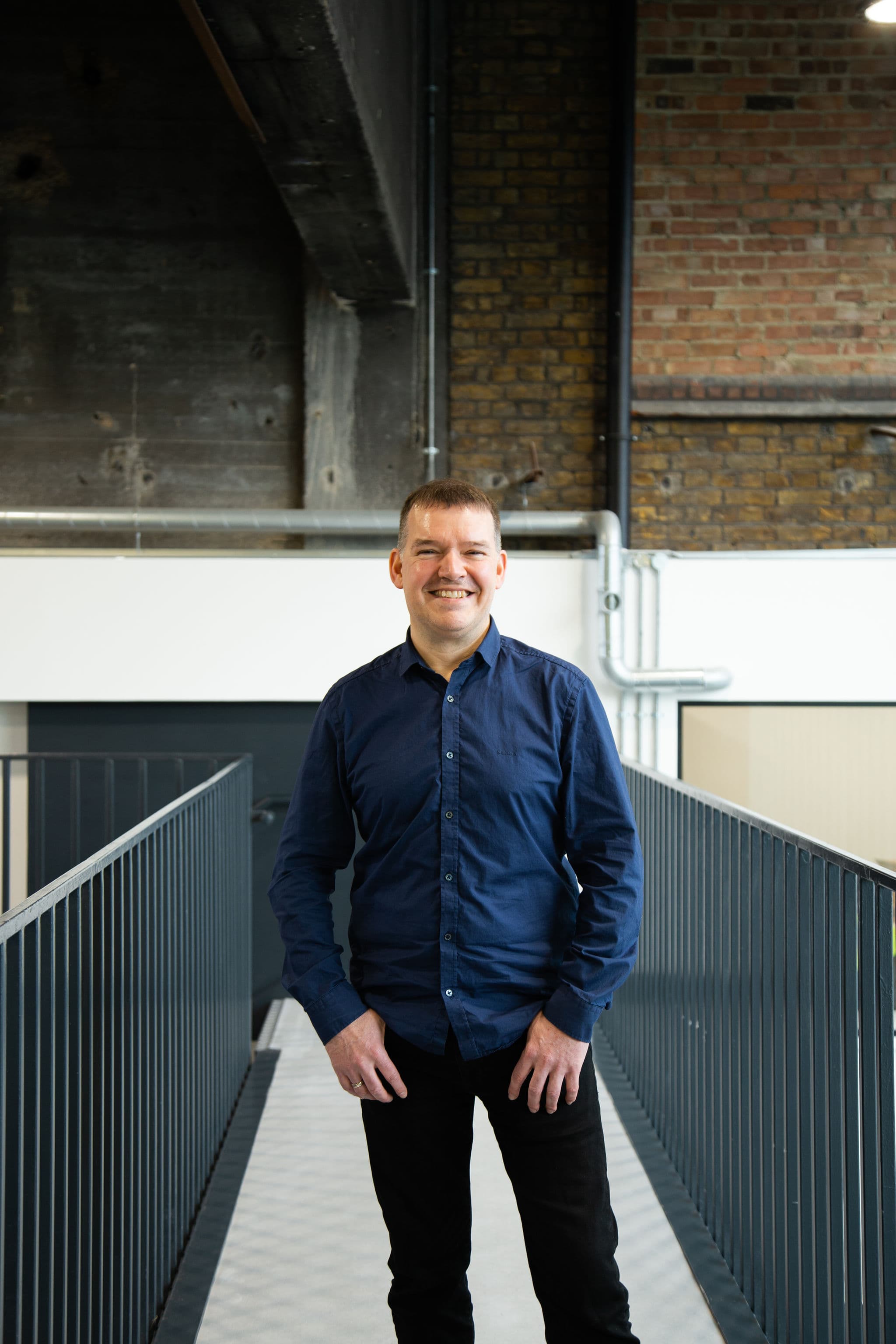
I teach business owners and aspiring buyers how to acquire ethically, using the same system Verdani Capital runs on. Ownership added to the career and income you already have, never swapped for it.
Application first. If it is not right for you now, I will say so and tell you what to do instead.
It doubled the profits of the business I already had.
That was 2014. Thirty-one transactions later, the thing that stops most people from starting is still the same thing: they believe they need the purchase price sitting in a bank account. They do not, and here is why.
Deferred consideration, seller financing, earn-outs and asset-backed lending do most of the heavy lifting. The cash you put in is usually the smallest part of the deal, and sometimes there is none at all.
Most people in the room are still earning £50k to £150k while they source and complete. The salary is an asset during the process, not an obstacle to it. You buy an owner-managed business with a team already in it.
Around 2% of listed businesses actually sell. The businesses worth owning are found off-market, through direct approach to owners with a succession problem and no plan. That is a sourcing system, and it can be taught.
I grew up on a council estate with no capital and no connections. What I did not have was anyone to check my thinking. That is exactly the gap this fills.
The Freedom Formula Mastermind.
The complete acquisition system, taught live, in the same order I use it. Eleven modules across four stages, from thesis and sourcing through funding and structure to completion and what happens after.
Every week, recorded if you cannot make it. Teaching, then live deal work on whatever is actually in front of members that week.
WhatsApp access to ask questions as they come up. Send me the deal before you send it to the seller. A sense-check on a structure or a number takes me ten minutes and saves you months.
Monthly targeted company data plus the direct-approach system behind it, the one currently generating serious off-market enquiries for my own acquisitions.
Lawyers, funders, brokers and sector specialists, introduced personally. The panel that lowers your legal cost is the panel I use on my own deals.
Members get the chance to partner alongside me on real acquisitions. Not a case study, not a simulation. Your name on the cap table.
Owners growing by acquisition and professionals buying their first. Everybody in the room is either mid-deal or getting ready for one.
The curriculum
- Foundations and thesis
- Sourcing and negotiation
- Funding and deal structure
- Completion and what comes after
Eleven modules sit inside those four stages, taught live and in the order the work actually happens. We go through the full map on the application call.
Whether the room is right for you.
This is for you if
- You earn a professional income, and you want to gain ownership to eventually replace it
- You already own a business and want to grow by acquisition rather than grind
- You will actually do the outreach, because sourcing is the whole game
- You want to buy ethically, protect the team and keep the seller whole
- You are prepared to work hard and take 12 months to do this properly
This is not for you if
- You want a passive income course you can watch and never act on
- You are looking to buy, strip and flip within eighteen months
- You want a guarantee that a specific deal will complete
- You expect deals handed to you rather than sourced by you
- You are not willing to have your assumptions challenged in a room
The Mastermind runs on a monthly fee with a discount for paying annually. Exact numbers are given on the application call, once we both know it is the right room for you. One to one mentoring is priced separately and limited to a handful of places.
Everything a first-time buyer asks.
The programme questions first, then how acquisitions actually work. If you are early enough that you are still deciding whether any of this is realistic, start with the second set.
About the Mastermind
What does the Freedom Formula Mastermind cost?
The Mastermind runs on a monthly fee, with a discount for paying annually. One to one mentoring is priced separately and limited to a handful of people. Exact numbers are given on the application call, once both sides know whether it is the right fit, because it is not worth either party’s time otherwise.
Why is there an application?
Because the value of the room is the room. Live deal work only helps everybody if the people in it are actually sourcing, and one person treating it as entertainment costs everyone else. If it is not right for you now, you will be told so directly, along with what to do in the meantime.
I have never bought a business. Is this too advanced for me?
No. The programme starts at module zero with the acquisition thesis, which is the work of deciding what you should be buying and why, before you look at a single target. Most members arrive having never done a deal. What matters far more than experience is whether you will do the outreach, because sourcing is the part nobody can do for you.
Can I buy a business alongside a full-time job?
Yes, and most members do. You are buying owner-managed businesses that already have a team running them, so you are not buying yourself a job. A professional salary makes you more fundable, not less. Sourcing and negotiating fits around employment; running the business afterwards is not supposed to be your job at all.
How much time does this take each week?
Realistically five to eight hours a week to make genuine progress, plus the weekly session. Most of that is outreach and conversations with owners, which fits around a job because owners are happy to talk early morning or evening. The people who stall are almost always the ones doing two hours a month, not the ones short of expertise.
I already own a business. Is the Mastermind still relevant?
Very much so. A meaningful part of the room is existing owners who want to grow by acquisition instead of grinding out organic growth. It also tends to make you a far better seller later, because you finally understand what a buyer is looking at when they value your company.
Do you guarantee I will complete a deal?
No, and be careful of anybody who does. Whether you complete depends on how much outreach you do, how disciplined you are about walking away from bad deals, and a degree of timing you cannot control. What is on offer is the system, the introductions, the deal flow and someone who has done it 32 times checking your thinking before you commit.
What support is there between the weekly sessions?
Direct access to Lee. Send the deal before you send it to the seller. A sense-check on a structure or a number takes ten minutes and routinely saves months. Members also get monthly targeted company data and the outreach system behind it, plus personal introductions to lawyers, funders, brokers and sector specialists.
Can I invest alongside Verdani rather than buy on my own?
Sometimes, yes. Members get the chance to joint venture on live Verdani acquisitions, which means a real deal with your name on the cap table rather than a case study. It is not automatic and it depends on the deal and on where you are, but it is a genuine route for people who would rather learn on a live transaction than a solo first buy.
How buying a business actually works
How much money do I need to buy a business?
Far less than most people assume, and occasionally none of your own. Most deals are built from deferred consideration, seller financing, earn-outs and asset-backed lending rather than cash up front. What you actually need is a structure the seller says yes to. The cash element is usually the smallest part of the deal and is often not the buyer’s own money.
What is seller financing, and why would an owner agree to it?
Seller financing is when the owner accepts part of the price over time out of the profits of the business, rather than all of it at completion. Owners agree because it usually raises the total they receive, it can be more tax efficient, and for many the alternative is no sale at all: around 2% of businesses that go to market actually complete. A seller who believes in the business is often comfortable being paid by it.
What is deferred consideration?
Deferred consideration is a fixed part of the purchase price paid on an agreed date after completion, typically over one to three years. It differs from an earn-out because the amount is certain and not conditional on performance. It is the simplest way to bridge a gap between what a seller wants and what a buyer can fund on day one.
What is an earn-out?
An earn-out is part of the price paid only if the business hits agreed targets after completion, usually profit over one to three years. It bridges a genuine disagreement about what the business is worth: the seller believes the growth is coming, the buyer will pay for it once it arrives. The detail matters enormously, because who controls the costs during the earn-out period decides whether it ever pays out.
Can you really buy a business with no money down?
Occasionally, yes, but it is the exception and not the goal. No money down usually means the purchase price is funded entirely by seller financing and the assets or cash flow of the business itself. It works best where an owner needs out for reasons other than money, such as health, retirement or having no succession. Chasing it as a strategy leads people to buy bad businesses because they were cheap.
How do I find businesses that are actually for sale?
The best ones are not for sale, which is exactly why they are worth buying. Around 2% of listed businesses complete a sale, so the businesses worth owning are found off-market, by approaching owners directly who have a succession problem and no plan. That is a repeatable sourcing system built on targeted company data and consistent direct outreach, not luck.
How is a small business valued?
On a multiple of adjusted, sustainable profit, not turnover. Adjusted means normalising the owner’s salary and any personal costs, and stripping out one-offs. The multiple then reflects risk: contract cover, customer concentration, how much depends on the owner, and the strength of the management underneath. In owner-managed UK SMEs, low single-digit multiples are common, and the exact number is driven by those risk factors more than by sector.
What is EBITDA, and why does everyone use it?
EBITDA is earnings before interest, tax, depreciation and amortisation. It is used because it strips out how a business happens to be financed and how it depreciates assets, which lets two businesses be compared on trading performance alone. It is a comparison tool, not cash in your pocket: a business with heavy equipment replacement needs a much lower multiple than the EBITDA alone suggests.
What size of business should I buy first?
Big enough to afford management underneath the owner, which in practice usually means at least a few hundred thousand of adjusted profit. Buying something too small is the most common first-timer mistake: it cannot carry a manager, so you inherit the owner’s job along with the risk. A larger, properly run business is frequently both easier to fund and far less work to own.
Do I need experience in the industry I am buying into?
Not usually, and sometimes it is a disadvantage. You are buying a business that already has the technical expertise inside it. What you need is the judgement to keep the right people, the discipline not to change things you do not yet understand, and enough sector literacy to tell a good business from a bad one. Buying into a sector where you know absolutely nobody makes sourcing harder, which is a real, practical reason to have a thesis first.
What does due diligence actually involve?
Three strands running in parallel. Financial: verifying the profit is real and sustainable, and that the working capital and debt are what you were told. Legal: contracts, employment, property, litigation and anything that transfers with the company. Commercial and cultural: whether the customers stay, whether the staff stay, and how much of the business walks out of the door with the owner. The third is the one first-time buyers skip and the one that most often causes the damage.
What are heads of terms?
Heads of terms is a short document setting out the agreed shape of the deal before anybody spends money on lawyers: price, structure, timing, what happens to the owner, and exclusivity. It is mostly not legally binding, but it is where a deal is really made. Getting it right prevents the slow renegotiation that kills deals three months later, and it is the single document worth having reviewed by somebody experienced.
What if the bank says no?
A bank declining is normal and it is rarely the end. High street lenders assess a business acquisition on security and track record, which a first-time buyer usually lacks. The realistic routes are seller financing, asset-backed lending against debtors, stock or equipment, specialist acquisition funders, and joint venturing with someone who brings the capital while you bring the deal. Most completed SME acquisitions use two or three of these together.
Do I need a lawyer, and what does it cost?
Yes, and use one who does business acquisitions specifically, not your local high street firm. Expect several thousand pounds for a straightforward SME deal, more if the structure is complex or the property is involved. The cost is real but small against what a badly drafted warranty schedule can cost you afterwards. Members use my lawyer panel, which typically lowers the bill and shortens the process.
What happens to the staff when I buy a business?
In a share purchase, nothing changes legally: employees stay employed by the same company on the same terms. In an asset purchase, TUPE applies and their terms transfer with them. Practically, the first hundred days decide whether they stay. The most reliable thing you can do is change very little at first and be visibly straight with people, because a business that loses its key staff in month two is worth a fraction of what you paid.
How long does it take to buy your first business?
Realistically twelve to twenty-four months from a standing start, and it depends almost entirely on how much outreach you do. Anybody promising a completion in ninety days is selling you something. Buying the right business in month twenty beats buying the wrong one in month four, and the wrong one is very hard and very expensive to undo.
What are the biggest mistakes first-time buyers make?
Five, repeatedly. Buying something too small to carry a manager. Falling in love with the first deal and losing the ability to walk away. Under-estimating working capital, so the business is starved the week after completion. Skipping cultural diligence and losing the key staff. And negotiating hard on price while giving away everything on structure, when structure is usually where the real money sits.
Should I buy a business or start one?
Buying, if your goal is ownership and income rather than inventing something new. A startup has no customers, no revenue and no team, and most fail. An established business has all three on day one, plus a track record a lender can actually assess. The trade-off is that buying needs a structure and a process, which is learnable, whereas a startup mostly needs luck.
Is buying a business risky?
Yes, and the risk is manageable rather than eliminable. The dangerous risks are concentration, working capital and the owner being the business. Each is visible in diligence if you look. The single largest risk reduction available to a first-time buyer is having someone experienced review the structure and the heads of terms before they are signed, because almost every expensive acquisition mistake is structural and is visible before completion.
Apply to the Freedom Formula Mastermind.
Tell me where you are, what you want to own, and whether you already have a live deal in front of you. I read every application myself and I will tell you straight whether the room fits, or whether it does not yet.
Prefer to talk now? Call 020 3475 5475 or email lee@verdanicapital.co.uk.
One call covers both the Mastermind and mentoring.
Fifteen minutes. Tell me where you are, what you want to own, and whether you have a live deal in front of you. I will tell you straight which of the two fits, or whether neither does yet.
I take this call myself, and I will give you the exact numbers on it once we both know it is the right room for you.
Prefer not to use the calendar? Call 020 3475 5475.
Ownership, added to what you already have.
Tell me where you are and what you want to own in three years. If the Mastermind is not the right room for you yet, you will know on the first call, and I will tell you what to do in the meantime.
Featured on BBC Radio, Sky News and various podcasts